Marine Power System Check: Battery, Charger, Inverter, and Wiring
A structured review of the electrical system helps you ask better questions before adding power-hungry equipment or replacing a component.
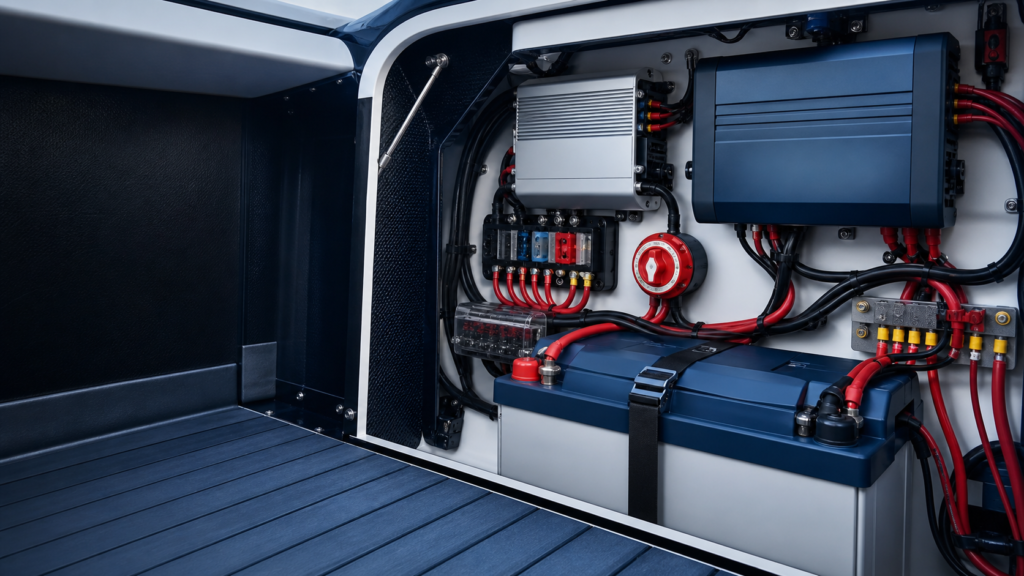
Marine electrical work benefits from methodical planning. Whether you are adding an inverter, replacing a charger, updating a battery switch, or troubleshooting a circuit, a clear map of the existing system is more useful than starting with an individual product.
Build a simple load map
Start by listing the equipment that uses power and the equipment that restores it. Include electronics, pumps, lighting, refrigeration, charging sources, inverters, and any items that may run at the same time. This does not replace an engineering calculation, but it gives you a practical picture of what the system is being asked to support.
Note battery chemistry, capacity, age, and the charging equipment already installed. A new accessory can change the demands on a battery bank, charger, cabling, or protective device even when its individual power draw seems modest.
Treat protection and routing as part of the product
Fuses, breakers, disconnects, terminals, cable support, and enclosures are not afterthoughts. They are part of a system designed to manage power safely and make maintenance possible. Use the product documentation and applicable marine standards to determine the correct components and installation practices.
Cable paths should avoid heat, abrasion, standing water, sharp edges, and moving mechanisms. Labeling both ends of a circuit can turn later troubleshooting from a long search into a routine check.
Plan additions with the full system in view
Before ordering a charger, inverter, switch, or battery accessory, gather the product identifiers for the components it must work with. Confirm voltage, connector type, mounting location, and manufacturer compatibility. A neat worksheet of existing models and photos is worth keeping with the boat records.
Electrical systems can present real hazards. When the scope involves high-current circuits, battery banks, charging systems, or uncertainty about prior work, consult a qualified marine electrician and follow the manufacturer installation instructions.
Every boat, component revision, and installation environment is different. Confirm final compatibility, installation method, safe operation, and applicable rules with the relevant manufacturer documentation and qualified marine service when appropriate.