How to Build a Safer Marine Navigation Stack
A practical way to decide what belongs at the helm before you add screens, sensors, or network hardware.
A capable marine navigation setup is less about adding every available device and more about building a clear, dependable information path. Start with the way you actually operate the boat, then make each component earn its place at the helm.
Start with the decisions you make underway
Think through the moments when you need information quickly: leaving a marina, following a channel, running in changing light, avoiding a shallow approach, or returning after dark. A navigation stack should make those decisions easier to see, not create another screen to interpret.
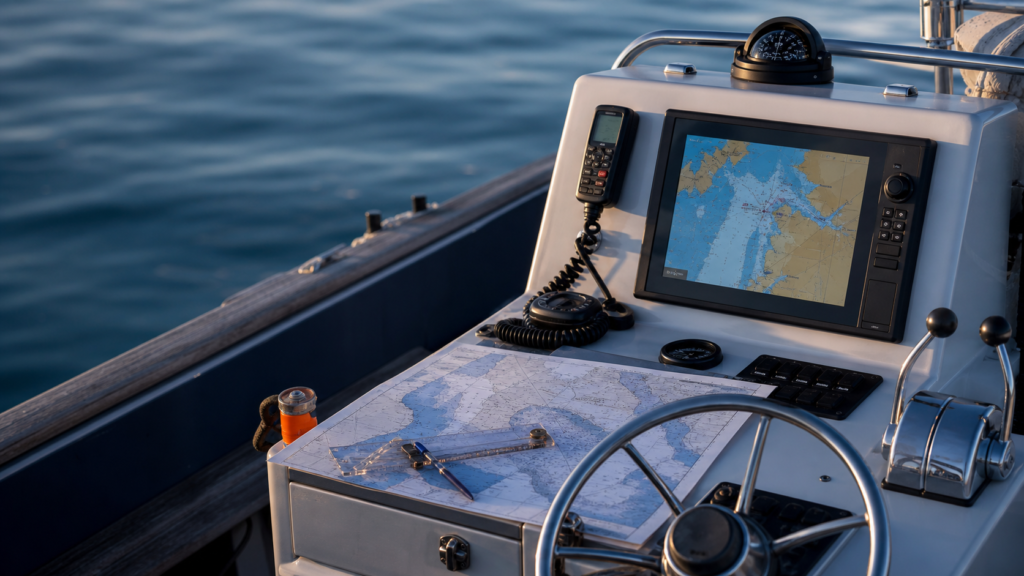
List the information you need at a glance, such as position, chart detail, depth, heading, speed, nearby traffic, or weather information. The list becomes a useful brief when comparing chartplotters, displays, radar, AIS, and VHF equipment.
Give every device a clear job
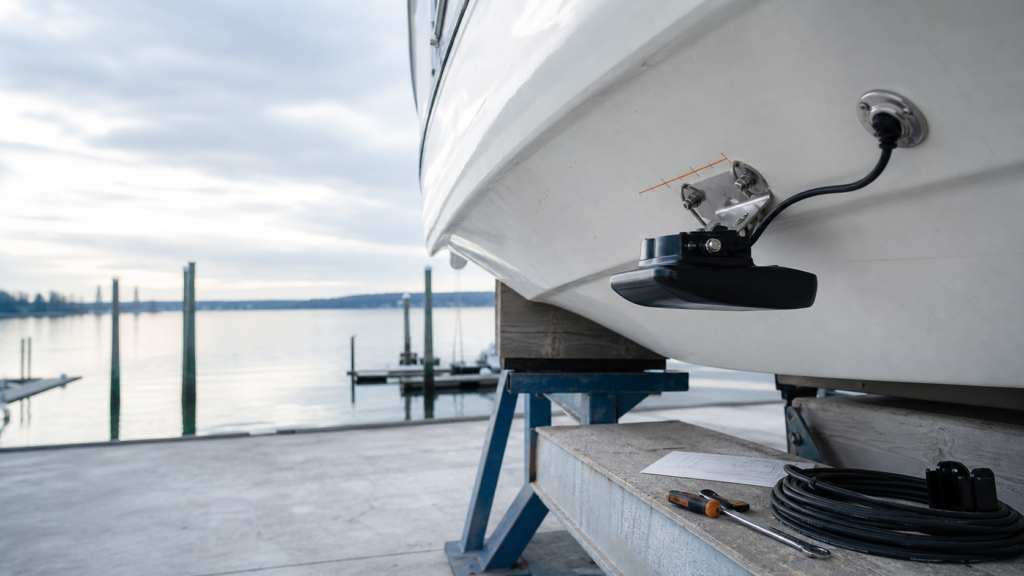
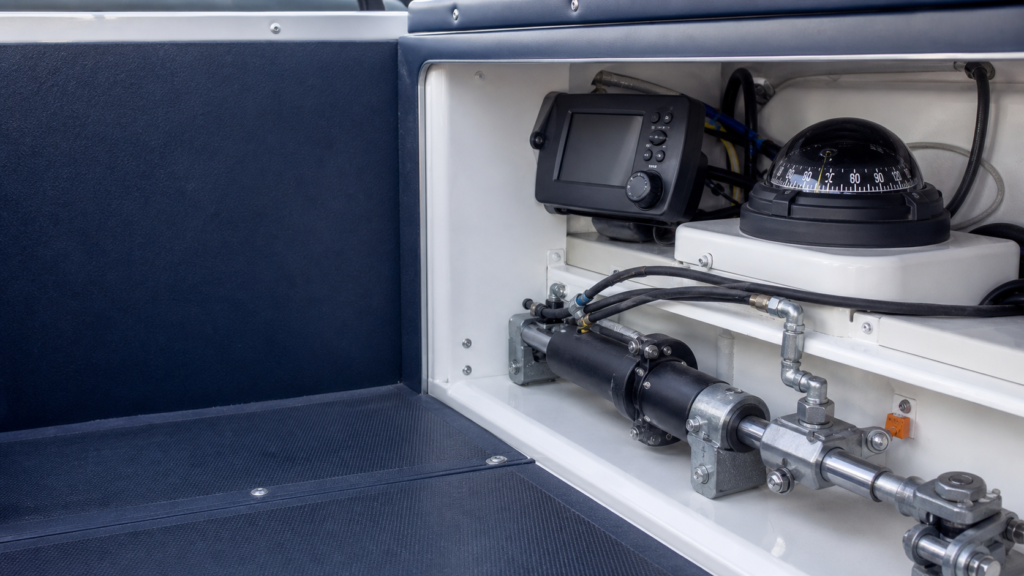
A chart display may be the visual anchor, while depth data, heading data, a VHF, or AIS information play supporting roles. Decide which item is the primary source for each job, then identify how the systems need to communicate. This prevents a helm from becoming a collection of disconnected gear.
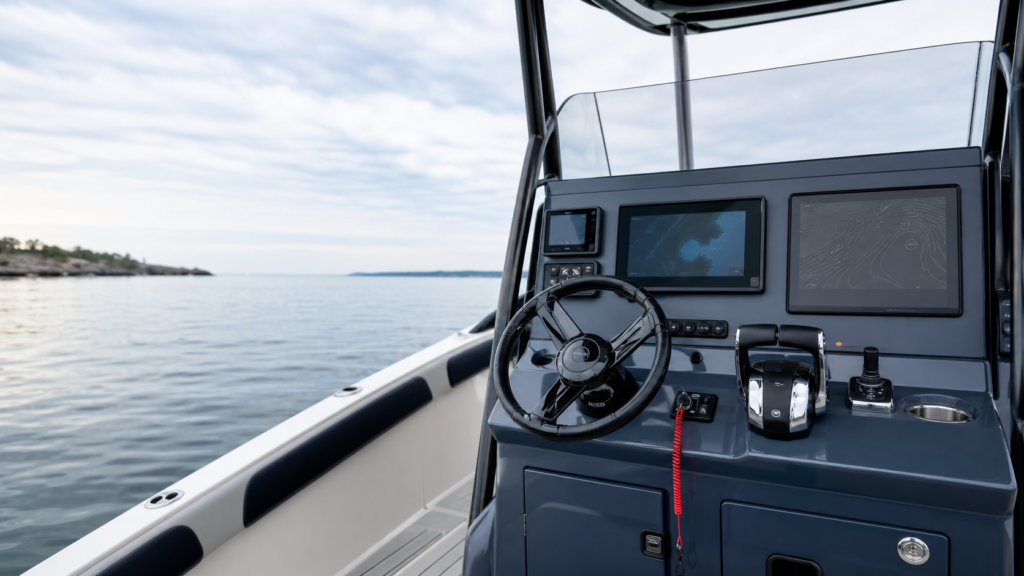
Placement matters as much as capability. A display blocked by a wheel, glare, canvas, or a passenger is not doing its job. Before cutting a panel or ordering a mount, mock up the screen positions, cable routes, and viewing angles from the operator seat.
Build in practical backup habits
Electronics are valuable tools, but a safe operating routine still includes current charts appropriate to your voyage, charged communication equipment, and a plan for loss of power or signal. Keep critical operating knowledge with the skipper, not inside one device.
After installation, test the system in familiar water. Confirm that alarms, chart orientation, sensor data, communications, and any networked components behave as expected before relying on them farther from shore.
Every boat, component revision, and installation environment is different. Confirm final compatibility, installation method, safe operation, and applicable rules with the relevant manufacturer documentation and qualified marine service when appropriate.